



- e-Kisan Upaj Nidhi was launched on 4 March 2024 by the Government of India.
- Farmers can obtain post-harvest loans of up to ₹75 lakh against eligible e-NWRs.
- The scheme helps farmers avoid distress sales by providing access to credit against stored agricultural produce.
- Eligible small and marginal KCC farmers may get loans at 7% interest per annum, subject to Government conditions.
- Warehousing Development and Regulatory Authority (WDRA)
- Registration-Related Queries: 011-49092987, 011-44789495
- General Queries: 011-49092978
- Email: [email protected]
Summary of the Scheme | |
|---|---|
| Name of Scheme | e-Kisan Upaj Nidhi (e-KUN) |
| Launch Year | 2024 |
| Benefits | Post-harvest loans up to ₹75 lakh against e-NWRs |
| Beneficiary | Farmers storing produce in WDRA-registered warehouses |
| Nodal Agency | Warehousing Development and Regulatory Authority (WDRA) |
| Subscription | Subscribe here to get Update Regarding Scheme |
| Mode of Apply | Online through JanSamarth Portal |
Scheme Introduction: A Brief Overview
Farmers often need money immediately after harvesting their crops to meet household expenses, repay loans, or prepare for the next farming season. Due to this financial pressure, many farmers are forced to sell their agricultural produce immediately after harvesting, even when market prices are low. To address this problem and improve farmers' access to institutional credit, the Government of India launched e-Kisan Upaj Nidhi (e-KUN) on 4 March 2024. It is a digital gateway that helps farmers obtain post-harvest loans from banks by pledging their electronic Negotiable Warehouse Receipts (e-NWRs) against agricultural produce stored in WDRA-registered warehouses. According to the Warehousing Development and Regulatory Authority (WDRA) FAQs, eligible farmers can obtain loans of up to ₹75 lakh through the platform, subject to the lending bank's terms and conditions. This facility allows farmers to arrange funds without immediately selling their stored produce and gives them an opportunity to sell it later when market prices are more favourable.
The platform was launched by the then Union Minister for Consumer Affairs, Food and Public Distribution, Piyush Goyal, and developed through the joint efforts of the Department of Food and Public Distribution (DFPD), Warehousing Development and Regulatory Authority (WDRA), Department of Financial Services (DFS), and NABARD. WDRA, which functions under the Ministry of Consumer Affairs, Food and Public Distribution, is the implementing regulatory authority for e-Kisan Upaj Nidhi. The platform is integrated with the JanSamarth Portal, where farmers can access loan offers from participating banks. For more information about the platform, its loan facilities, and application procedure, farmers can visit the official WDRA e-Kisan Upaj Nidhi page.
The main objective of e-Kisan Upaj Nidhi is to provide farmers with easier access to post-harvest finance, reduce distress sales, promote scientific storage of agricultural commodities, and improve the availability of institutional credit in rural areas. Under this facility, farmers can deposit their agricultural produce in WDRA-registered warehouses and obtain an electronic Negotiable Warehouse Receipt (e-NWR) through authorised repositories, namely National E-Repository Limited (NERL) and CDSL Commodity Repository Limited (CCRL). They can then use this receipt as security to apply for loans through the digital platform. The usual margin requirement is 25%, although it may vary between banks. The maximum loan tenure is generally linked to the shelf life of the stored commodity or the validity of the e-NWR and cannot exceed 12 months.
One of the important benefits of the platform is that farmers can compare loan offers from different participating banks, including the available loan amount and interest rates, before selecting a suitable lender. According to WDRA's FAQs, eligible small and marginal farmers holding a Kisan Credit Card (KCC) can avail themselves of an interest rate of 7% per annum on eligible loans of up to ₹3 lakh for a period of up to six months, subject to applicable Government interest subvention conditions. Other loan interest rates depend on the bank's lending policy and applicable benchmarks. The platform also facilitates digital verification and loan processing, reducing the need for repeated paperwork. The electronic warehouse receipt itself serves as security for the loan, without requiring additional collateral under the applicable arrangement.
To avail the benefits of e-Kisan Upaj Nidhi, farmers must store their agricultural produce in a WDRA-registered warehouse and obtain a valid e-NWR through an authorised repository. The applicant must have the relevant repository account details and fulfil the lending requirements of the selected bank. Farmers who already have an outstanding KCC production loan can also apply, subject to the condition that the outstanding production loan is adjusted from the sanctioned e-NWR loan amount. The platform supports the digital application and loan facilitation process; however, final approval, the applicable interest rate, loan amount, and disbursement depend on the bank's assessment and terms.
Farmers interested in obtaining a loan can visit the JanSamarth Portal and select the e-Kisan Upaj Nidhi option under e-NWR Financing. They can register using their repository account details, complete the required verification, compare available bank offers, and select a suitable lender. After receiving in-principle approval, applicants may need to visit the selected bank branch to complete the required documentation and loan formalities. For assistance regarding warehouse registration, e-NWRs, or the platform, farmers can refer to the official WDRA FAQs or contact the concerned bank or WDRA through its official website. It is important to note that WDRA does not guarantee loan approval; the final lending decision rests with the participating bank.
Apart from e-Kisan Upaj Nidhi, farmers can also explore other agriculture-related schemes listed on GovtSchemes.in. The Kisan Credit Card Scheme provides short-term agricultural credit to eligible farmers, while the National Agriculture Market (e-NAM) helps farmers access an online agricultural trading platform to sell their produce. Farmers interested in developing agricultural infrastructure, such as warehouses, cold storage facilities, and processing units, can also explore the Agriculture Infrastructure Fund (AIF). These schemes provide different forms of support for agricultural credit, marketing, and infrastructure development.
Scheme Benefits
Through e-Kisan Upaj Nidhi, farmers can access post-harvest loans against their stored agricultural produce without having to sell it immediately after harvesting. The platform offers several benefits that help farmers manage their financial needs and get better opportunities to sell their produce.
- Farmers can obtain post-harvest loans of up to ₹75 lakh against eligible electronic Negotiable Warehouse Receipts (e-NWRs), subject to the lending bank's rules and assessment.
- Eligible small and marginal farmers holding a Kisan Credit Card (KCC) can avail of loans at an interest rate of 7% per annum for up to six months on eligible loans of up to ₹3 lakh, subject to Government interest subvention conditions.
- Farmers generally receive loans of up to 75% of the assessed value of their stored agricultural produce, with a usual margin requirement of 25%, depending on the bank.
- The maximum loan tenure can extend up to 12 months, subject to the shelf life of the stored commodity or validity of the e-NWR, whichever is earlier.
- Farmers can compare loan offers from different participating banks, including interest rates and loan amounts, before choosing a suitable lender.
- The electronic warehouse receipt (e-NWR) serves as security for the loan, so farmers do not generally need to provide additional collateral under the applicable lending arrangement.
- The digital platform simplifies loan applications through electronic verification and data sharing, helping reduce paperwork and loan processing time.
- Farmers can obtain funds against their stored produce instead of selling it immediately after harvesting, allowing them to wait for more favourable market prices and reduce distress sales.
- Existing Kisan Credit Card (KCC) borrowers can also apply for loans against e-NWRs, subject to adjustment of their outstanding KCC production loan from the sanctioned amount.
- The platform encourages farmers to store their produce in WDRA-registered warehouses, promoting regulated storage and the use of electronic warehouse receipts.
Note: The above loan amounts, interest rates, margin requirements and tenure are subject to the participating bank's policies and applicable Government conditions. e-Kisan Upaj Nidhi facilitates loan applications but does not guarantee loan approval.
Loan Amount, Interest Rate and Repayment Period
The loan available through e-Kisan Upaj Nidhi depends on the value of the stored produce, the validity of the e-NWR and the lending bank's assessment. Farmers can compare the available offers on the platform before choosing a bank. The following table gives an overview of the main loan terms:
Particulars | Details |
|---|---|
| Maximum loan amount | Up to ₹75 lakh, subject to the bank's assessment and lending conditions. |
| Loan against stored produce | Generally, up to 75% of the assessed value of the stored produce, depending on the bank's margin requirements. |
| Interest rate | Varies according to the bank, loan amount, repayment period and applicable Government interest subvention. |
| Maximum repayment period | Up to 12 months, subject to the shelf life of the stored commodity and the validity of the e-NWR. |
| Security for the loan | The pledged electronic Negotiable Warehouse Receipt (e-NWR) serves as security for the loan, subject to the applicable lending conditions. |
Eligible small and marginal farmers holding a Kisan Credit Card (KCC) may be able to obtain loans of up to ₹3 lakh at an interest rate of 7% per annum for up to six months, subject to the applicable Government interest subvention conditions. This rate does not apply to every applicant or every loan.
The actual loan amount, interest rate, margin requirement and repayment conditions are decided by the participating bank. Therefore, farmers should compare the available offers before selecting a lender.
How Does e-Kisan Upaj Nidhi Work?
e-Kisan Upaj Nidhi connects farmers, registered warehouses, electronic warehouse receipt repositories and banks through a digital platform. It allows farmers to use their stored agricultural produce as security to obtain post-harvest loans instead of selling their produce immediately after harvesting. The process works in the following way:
- Store agricultural produce in a registered warehouse: First, the farmer deposits their harvested produce in a warehouse registered with the Warehousing Development and Regulatory Authority (WDRA).
- Get an electronic warehouse receipt: After the produce is deposited and the required formalities are completed, the warehouseman arranges for an electronic Negotiable Warehouse Receipt (e-NWR) through an authorised repository, such as NERL or CCRL.
- Register on the e-KUN platform: The farmer uses their repository account details to register on the e-Kisan Upaj Nidhi facility available through the JanSamarth Portal.
- Complete digital verification: The platform verifies the farmer's details through integrated databases. It also checks relevant credit information to help banks process the loan application.
- Compare available bank offers: After the verification process, the farmer can view loan offers from participating banks. These offers may differ in terms of loan amount, interest rate and other conditions.
- Select a bank and submit the application: The farmer chooses a suitable bank offer. The application is then forwarded to the selected bank for further checking and due diligence.
- Receive loan approval and funds: If the bank approves the application, it issues the sanction electronically. The farmer may need to visit the bank to complete the remaining formalities before the loan amount is disbursed.
Once the loan is granted, the e-NWR is pledged as security for the bank. This arrangement allows farmers to access funds against their stored produce while retaining the opportunity to sell it later, subject to the loan and warehouse conditions.
Eligibility Requirements
Farmers who want to obtain loans against their stored agricultural produce can apply through e-Kisan Upaj Nidhi. However, applicants must meet certain requirements related to warehouse storage, electronic warehouse receipts, and bank lending conditions to use this facility.
- The applicant must be a farmer who has stored agricultural produce in a warehouse registered with the Warehousing Development and Regulatory Authority (WDRA).
- The farmer must have a valid electronic Negotiable Warehouse Receipt (e-NWR) issued against the stored agricultural commodities.
- The e-NWR must be issued through a WDRA-authorised repository, namely National E-Repository Limited (NERL) or CDSL Commodity Repository Limited (CCRL).
- The farmer must have the relevant repository account details to register and apply through the e-Kisan Upaj Nidhi platform.
- The stored agricultural commodities must be eligible for e-NWR issuance under WDRA's notified commodity list.
- The applicant must fulfil the loan eligibility, verification, and documentation requirements of the selected participating bank.
- Farmers who already have a Kisan Credit Card (KCC) loan can also apply. However, their outstanding KCC production loan must first be adjusted from the sanctioned e-NWR loan amount.
The availability of a valid e-NWR does not guarantee loan approval. The selected bank will assess the application and decide the loan amount, interest rate, and other lending conditions.
Required Documents
Before applying for a loan through e-Kisan Upaj Nidhi, farmers should keep their basic identification details and warehouse receipt information ready. The following documents and details may be required during registration, verification, and loan processing:
- Aadhaar Card for identity verification.
- PAN Card for financial and income-related verification, wherever required.
- Valid electronic Negotiable Warehouse Receipt (e-NWR) issued against the stored agricultural produce.
- Repository account details from National E-Repository Limited (NERL) or CDSL Commodity Repository Limited (CCRL).
- Registered mobile number linked to the repository account.
- Bank account details for loan disbursement.
- Kisan Credit Card (KCC) details, if applicable.
- Any additional documents required by the selected bank for loan verification and approval.
The exact document requirements may vary depending on the participating bank and the applicant's profile. Farmers should check the requirements of their selected bank before submitting the loan application.
Steps to Apply
Farmers can use e-Kisan Upaj Nidhi to obtain loans against agricultural produce stored in WDRA-registered warehouses. The process starts with depositing the produce and obtaining an electronic Negotiable Warehouse Receipt (e-NWR). After receiving the receipt, farmers can apply for a loan through the JanSamarth Portal. Follow these steps to complete the process:
First, check the WDRA website for a registered warehouse that accepts your agricultural commodity. You can also check the list of notified commodities to make sure your produce is eligible for storage. Before taking your produce to the warehouse, open an account with an authorised repository, either NERL or CCRL, directly or through its authorised representative. Contact the selected warehouse to confirm its deposit procedure, charges and other requirements. Then take your produce to the warehouse and complete the required formalities. The warehouse will check the quantity and quality of the produce, and an authorised assayer will assess its grade. Once the produce meets the required standards, the warehouse will arrange for an electronic Negotiable Warehouse Receipt (e-NWR) to be issued through the repository. You can then use this e-NWR to apply for a loan through e-Kisan Upaj Nidhi.
- Open the JanSamarth Portal and look for the e-NWR Financing category. Select the e-Kisan Upaj Nidhi (e-KUN) option to begin the application process.
- Register on the portal using the required details, including your repository account information from NERL or CCRL. Keep your registered mobile number and other identification details ready to complete the registration and verification process.
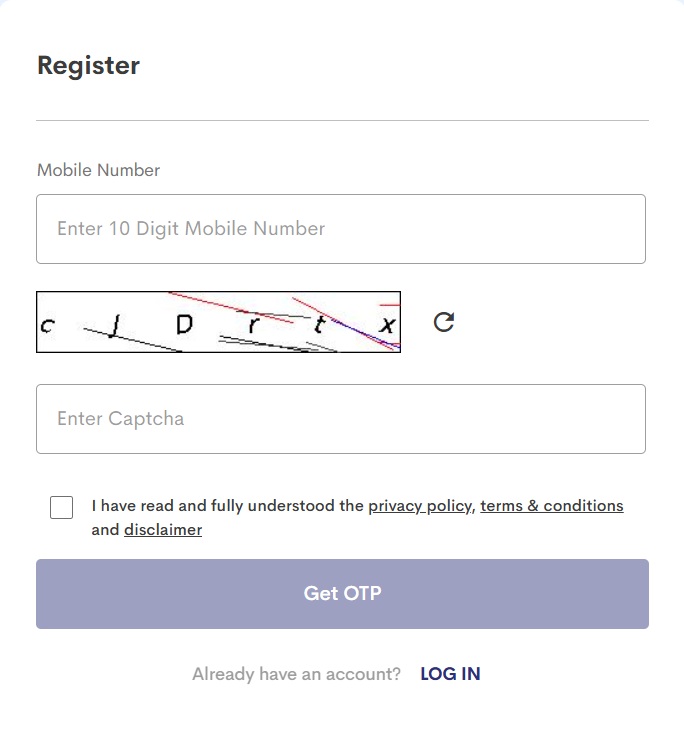
- After registration, the portal will verify your details through integrated databases, including UIDAI, CBDT and the authorised repository. Relevant credit information may also be checked as part of the loan application process.
- Once the verification is completed, the portal will display available loan offers from participating banks. Check the loan amount, interest rate and other conditions offered by each bank before selecting the one that suits your requirements.
- Select your preferred bank and submit the application through the portal. The system may provide digital in-principle approval, after which the application is forwarded to the selected bank for further assessment.
- The selected bank will examine your application and complete its due diligence. You may need to visit the bank branch and submit additional documents or complete other formalities, if required.
- Once the bank approves the loan, the e-NWR will be pledged as security and the loan amount will be disbursed to your bank account, subject to the bank's lending conditions.
For help with the application process, warehouse requirements or e-NWR-related queries, farmers can refer to the official WDRA FAQs. They can also contact the selected bank for details about loan approval, documentation and disbursement.
Important Things Farmers Should Know Before Applying
Before starting the application, farmers should understand a few important conditions related to warehouse storage and bank loans. Knowing these details can help them avoid difficulties during registration and loan processing.
- The agricultural produce must be stored in a WDRA-registered warehouse, and the farmer must have a valid e-NWR issued against the stored produce.
- Not every warehouse accepts every type of agricultural produce. Farmers should confirm whether their commodity is accepted and check the storage charges and other requirements before depositing it.
- The maximum loan limit of ₹75 lakh is not guaranteed for every applicant. The bank decides the eligible loan amount after assessing the stored produce and the farmer's repayment capacity.
- The amount offered against stored produce, interest rate, margin requirement and repayment period may vary from one bank to another.
- There is no Government-prescribed minimum CIBIL score for registering on the e-KUN portal. However, individual banks may check the applicant's credit score and history while processing the loan.
- Farmers who already have an outstanding Kisan Credit Card (KCC) production loan can also apply. However, the outstanding production loan must be adjusted from the sanctioned e-NWR loan amount before the remaining funds are released.
- The e-NWR is pledged as security for the loan. Farmers should understand the bank's repayment conditions and the procedure for releasing the pledged receipt.
- Completing registration or receiving digital in-principle approval does not mean that the loan has been finally sanctioned. The selected bank must complete its checks before approving and disbursing the loan.
- Farmers may need to visit the selected bank branch to complete documentation and other formalities before receiving the loan amount.
It is important to understand that e-Kisan Upaj Nidhi is a digital loan facilitation platform, not a scheme that provides direct financial assistance or grants to farmers. The loan is provided by the participating bank, and the final approval depends on the bank's assessment and lending conditions.
Difference Between e-Kisan Upaj Nidhi and CGS-NPF
e-Kisan Upaj Nidhi and the Credit Guarantee Scheme for e-NWR Based Pledge Financing (CGS-NPF) are related to post-harvest loans against electronic Negotiable Warehouse Receipts. However, they serve different purposes. While e-KUN helps farmers apply for loans through a digital platform, CGS-NPF provides credit guarantee support to eligible lending institutions.
Particulars | e-Kisan Upaj Nidhi (e-KUN) | CGS-NPF |
|---|---|---|
Full name | e-Kisan Upaj Nidhi | Credit Guarantee Scheme for e-NWR Based Pledge Financing |
Main purpose | Facilitates farmers' access to post-harvest loans against e-NWRs through a digital platform. | Provides credit guarantee coverage to eligible lenders for loans against e-NWRs. |
Launch date | 4 March 2024 | 16 December 2024 |
Implementing authority | Warehousing Development and Regulatory Authority (WDRA), under the Department of Food and Public Distribution. | Department of Food and Public Distribution, with the National Credit Guarantee Trustee Company (NCGTC) as the trustee. |
Who benefits? | Farmers seeking post-harvest loans against eligible stored agricultural produce. | Eligible borrowers, including farmers, MSMEs, traders, Farmer Producer Organisations (FPOs) and farmer cooperatives, through participating lending institutions. |
Financial support | Facilitates bank loans of up to ₹75 lakh, subject to the bank's assessment and conditions. | Provides guarantee coverage for eligible agricultural loans up to ₹75 lakh and eligible non-agricultural loans up to ₹2 crore. |
How it works | Farmers register, compare available bank offers and apply for loans through the JanSamarth Portal. | Eligible lending institutions receive guarantee coverage against qualifying loans under the scheme guidelines. |
In simple terms, e-Kisan Upaj Nidhi helps farmers access loans, whereas CGS-NPF helps eligible banks and financial institutions manage the risk of providing loans against e-NWRs. The two schemes are complementary, but they are not the same programme.
Relevant Links
- Warehousing Development and Regulatory Authority (WDRA) – e-Kisan Upaj Nidhi
- JanSamarth Portal – e-Kisan Upaj Nidhi Loan Application
- e-Kisan Upaj Nidhi – Frequently Asked Questions
- e-Kisan Upaj Nidhi – Official Brief Note
- Department of Food and Public Distribution – Official Website
Contact Information
Farmers can contact the Warehousing Development and Regulatory Authority (WDRA), which oversees the e-Kisan Upaj Nidhi platform, for queries related to the scheme and its implementation.
Warehousing Development and Regulatory Authority (WDRA)
- Registration-Related Queries: 011-49092987, 011-44789495
- General Queries: 011-49092978
- Email: [email protected]
- Address: 4th Floor, NCUI Building, 3, Siri Institutional Area, August Kranti Marg, Hauz Khas, New Delhi – 110016.
- Working Hours: 10:00 AM to 6:00 PM on working days.
For loan application-related queries, farmers can also contact the bank selected through the JanSamarth Portal.
Frequently Asked Questions
e-Kisan Upaj Nidhi (e-KUN) is a digital loan facilitation platform launched by the Government of India on 4 March 2024. It helps farmers obtain post-harvest loans from banks by pledging electronic Negotiable Warehouse Receipts (e-NWRs) against their stored agricultural produce.
Farmers who store eligible agricultural produce in WDRA-registered warehouses and obtain a valid e-NWR through an authorised repository can apply. They must also meet the lending requirements of the selected bank.
Farmers can obtain loans of up to ₹75 lakh against eligible e-NWRs. However, the actual loan amount depends on the value of the stored produce and the selected bank's assessment.
The interest rate depends on the participating bank, loan amount and repayment period. Eligible small and marginal farmers holding a Kisan Credit Card (KCC) may get an interest rate of 7% per annum on eligible loans of up to ₹3 lakh for up to six months, subject to Government interest subvention conditions.
No, having a KCC is not mandatory to apply. However, eligible small and marginal farmers with a KCC may receive the applicable interest subvention benefits, subject to Government conditions.
An e-NWR is an electronic document issued against agricultural produce stored in a WDRA-registered warehouse. It serves as proof of the stored produce and can be pledged as security to obtain a loan from a bank.
Farmers can apply through the JanSamarth Portal. They need to select e-Kisan Upaj Nidhi under the e-NWR Financing category, register using their repository account details, complete verification and choose a suitable loan offer from participating banks.
Loans are offered through participating Public Sector Banks, Private Sector Banks and Regional Rural Banks. Farmers can check the available lenders and compare their loan offers through the JanSamarth Portal.
There is no Government-prescribed minimum CIBIL score for registering on the e-KUN portal. However, individual banks may check the applicant's credit score and history while assessing the loan application.
The loan repayment period can extend up to 12 months, subject to the shelf life of the stored commodity and the validity of the e-NWR. The actual repayment period is decided by the lending bank.
No, e-Kisan Upaj Nidhi does not provide direct grants or subsidies. It helps farmers access post-harvest loans from participating banks against their stored agricultural produce.
Do you have any question regarding schemes, submit it in scheme forum and get answers:
Feel free to click on the link and join the discussion!
This forum is a great place to:
- Ask questions: If you have any questions or need clarification on any aspect of the topic.
- Share your insights: Contribute your own knowledge and experiences.
- Connect with others: Engage with the community and learn from others.
I encourage you to actively participate in the forum and make the most of this valuable resource.


Matching schemes for sector: Loan
| Sno | CM | Scheme | Govt |
|---|---|---|---|
| 1 | 
|
Kisan Credit Card Scheme | CENTRAL GOVT |
| 2 |
|
Credit Guarantee Scheme for Startups | CENTRAL GOVT |
| 3 |
|
Pradhan Mantri Mudra Yojana (PMMY) | CENTRAL GOVT |
| 4 |
|
Standup India Scheme | CENTRAL GOVT |
| 5 |
|
Divyangjan Swavalamban Scheme | CENTRAL GOVT |
| 6 |
|
JanSamarth Portal National Portal for Credit Linked Government Scheme | CENTRAL GOVT |
| 7 |
|
PM SVANidhi Scheme | CENTRAL GOVT |
| 8 |
|
PM Vishwakarma Yojana | CENTRAL GOVT |
| 9 |
|
PMFME Scheme | CENTRAL GOVT |
| 10 |
|
PM Vidyalaxmi Scheme | CENTRAL GOVT |
| 11 |
|
Pradhan Mantri Awas Yojana Urban | CENTRAL GOVT |
| 12 |
|
VISVAS Yojana | CENTRAL GOVT |
| 13 |
|
PM-USP Central Sector Interest Subsidy Scheme (CSIS) | CENTRAL GOVT |
| 14 |
|
SBI Surya Shakti Solar Finance | CENTRAL GOVT |
| 15 |
|
Agriculture Infrastructure Fund | CENTRAL GOVT |
| 16 |
|
Emergency Credit Line Guarantee Scheme | CENTRAL GOVT |
| 17 |
|
Home Loan Scheme for EWS, LIG and MIG: Urban Areas | CENTRAL GOVT |
Add new comment